What happens to Dutch plastic waste

You sorted
your plastic.
Then it disappeared
into the dark.

The numbers
1,990 kilotonnes.
Tracked to the port,
then lost at sea.

In 2017, the Netherlands collected 1,990 kt of plastic waste. Lobelle et al. (2024) produced the first complete material flow analysis — where it came from, where it went, and how much leaked into the environment. Here is what we know.

1,990 kt
total plastic waste collected, including 623 kt imported
648 kt
recycled domestically · 33% of total
567 kt
incinerated domestically · 29% of total
514 kt
exported to 56 destination countries
4–20 kt
Entered foreign environment

Estimated annual leakage abroad — plastic that left the Netherlands and ended up in rivers, land or ocean in destination countries. The 5× range reflects the absence of direct measurement.

Lobelle et al. 2024
0.02–0.87 kt
Entered Dutch environment

Domestic land and water leakage — the plastic that stayed in the Netherlands. A 40× uncertainty range because land litter is counted by item, never by mass.

514 kt
Exported, fate unknown

A quarter of all Dutch plastic waste left the country. After Rotterdam, Dutch law stopped tracking it. UN Comtrade records the shipment — not what happens next.

The numbers
296 kt of Dutch food packaging.
6.5 kt reaches the ocean.

Navarre et al. (2022) narrowed the lens to one sector — food packaging — and traced its full lifecycle. Their finding is the single most consequential number in the Dutch dataset.

The Dutch food sector generates 296 kt of plastic packaging annually. Of this, 6.5 kt per year reaches the marine environment. That is a 2.1% marine leakage rate — not exceptional by European standards, but not better than the global average either.

The routing matters: 75% of that 6.5 kt does not spill from a Dutch roadside or float down a Dutch river. It leaks after export — in processing facilities in Indonesia, Malaysia, Vietnam, Turkey and India — from packaging labelled in Dutch, certified in the Netherlands, counted as recycled in Dutch statistics.
Food packaging
296 kt
Dutch food sector annual plastic packaging volume.
Marine leakage
6.5 kt/yr
Estimated annual flow to the ocean. 75% via exports to Asia, 3% to other nations and 22% domestic littering.
Navarre et al. 2022
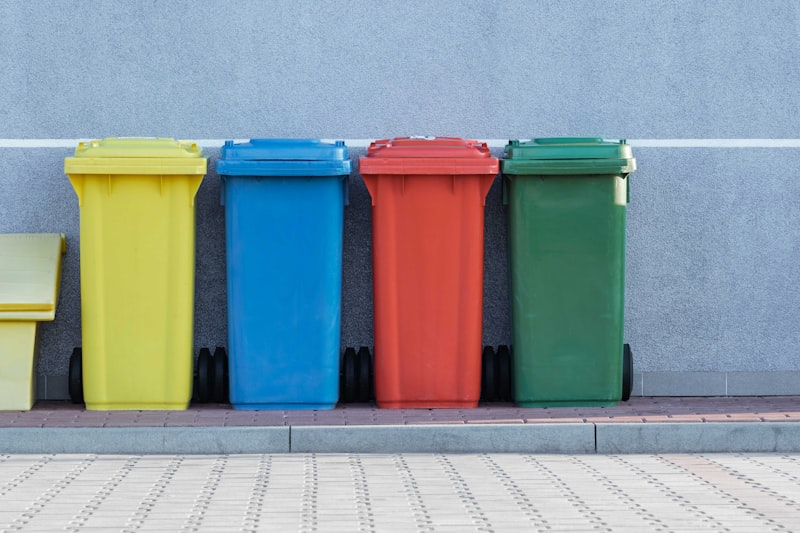
Plastic waste sorting facility

A plastic sorting facility. Once material leaves here as a certified export, Dutch reporting chains consider the job done. What happens in the destination country is largely unknown.
Riverbank monitoring
2,060 items
per kilometre of
Dutch riverbank.

Between 2017 and 2019, trained volunteers sampled 152,415 litter items at 212 unique locations along the Dutch Rhine–Meuse delta using the River-OSPAR protocol. A follow-up study in 2021 measured floating plastic transport at 26 locations across the Rhine, IJssel and Meuse.

On the riverbanks, foam, hard and soft plastic fragments dominated — 55.8% of all items. The most abundant specific items were plastic bottles, food wrappings, caps, lids and cotton swabs. 85.1% of all items were identified as plastic. Litter density was higher in spring (2,430 items/km) than in autumn (1,060 items/km), driven by preceding peaks in river discharge that mobilise accumulated plastic from riverbanks.

Spatial hotspots
Belgian border · Meuse — highest local density along the Meuse; upstream hotspot between Maastricht and Belgium
German border · Rhine/Waal — highest local density along the Rhine; hotspot between Nijmegen and Germany
Biesbosch National Park — accumulation node where both rivers meet in the tidal zone
Nederrijn — highest overall median of the three rivers (3,990 items/km); uniformly dense throughout, unlike the localised hotspots on the Meuse and Rhine
Van Emmerik et al. 2020, Van Emmerik et al. 2022
The paradox
Four times the global recycling rate.
The same ocean.

The Netherlands reports a 78% recycle rate of packaging waste (Eurostat, 2021), and Lobelle et al. (2024) estimates a 33% overall plastic recycling rate — roughly four times the global average of 9% (Geyer et al. 2017). On paper, a model for Europe. In practice, Dutch food packaging leaks to the marine environment at globally average rates.

The explanation lies in what the recycling rate actually measures. Once material leaves as a certified export, it is counted as recycled. But a substantial share of those exports reaches Asian countries, where open dumping rates exceed 20%. The plastic counted as recycled in Amsterdam ends up in an Asian river.

Navarre et al. (2022) traced the Dutch food packaging stream specifically: of 296 kt processed annually, 6.5 kt per year reaches the marine environment. Three-quarters of that leakage — 78% — occurs not from Dutch roadsides or rivers, but from the recycling export chain. Material certified in the Netherlands, labelled in Dutch, counted as recycled, and leaking into the Pacific.

The Netherlands also imports roughly 18.5% of the world's plastic waste — despite having only 0.24% of the world's population (Fair Resource Foundation 2025). Much of this imported scrap is re-exported after sorting. Its ultimate fate is unknown. The country's position as the world's largest per-capita plastic waste importer adds a further layer of transboundary responsibility that domestic statistics do not capture.

≈ global avg
Marine leakage rate

Despite a high recycling rate, Dutch marine leakage per tonne of food packaging is indistinguishable from the world average (Navarre et al. 2022).

78%
Leaks via export chain

Three-quarters of Dutch marine leakage does not come from domestic littering — it leaks after export, in countries where waste management is inadequate. Navarre et al. 2022.

18.5%
Of global plastic imports

The Netherlands receives nearly a fifth of all global plastic waste imports. Source, treatment and fate of this material are largely unrecorded. Fair Resource Foundation 2025.

Deposit Return System
The one policy that
worked.

A single financial incentive changed behaviour faster than any awareness campaign. The Dutch deposit return system is the cleanest causal signal in the dataset.

On 1 July 2021 the Netherlands introduced a €0.15 deposit on small PET bottles (between 0.25 L and 3 L) following an EU directive requiring member states to achieve a 77% collection rate for PET bottles by 2025. In January 2023, aluminium cans were added to the DRS scope under the same legislation.

77%
PET bottle collection rate

Achieved in 2024, meeting the EU target one year ahead of the 2025 deadline. Verpact annual report 2024.

Phase 1
1 July 2021 · PET bottles

Deposit of €0.15 on PET bottles between 0.25 L and 3 L. Replaces the voluntary EPR scheme that had been in place since 2003 was abandoned.

Phase 2
1 January 2023 · aluminium cans

Deposit extended to aluminium cans. Both phases mandated by the EU Single-Use Plastics Directive (EU 2019/904).

−65%

Reduction in plastic bottle litter · Q4 2021 vs Q4 2020 · Zwerfinator citizen-science database, Purmerend baseline · zwerfinator.nl

−80%

Reduction in all deposit-eligible containers (bottles + cans) vs 2020 baseline · after cans joined DRS January 2023 · Verpact annual report 2024

Sources: EU Single-Use Plastics Directive 2019/904 · Verpact annual report 2024 · Zwerfinator citizen-science database (zwerfinator.nl)
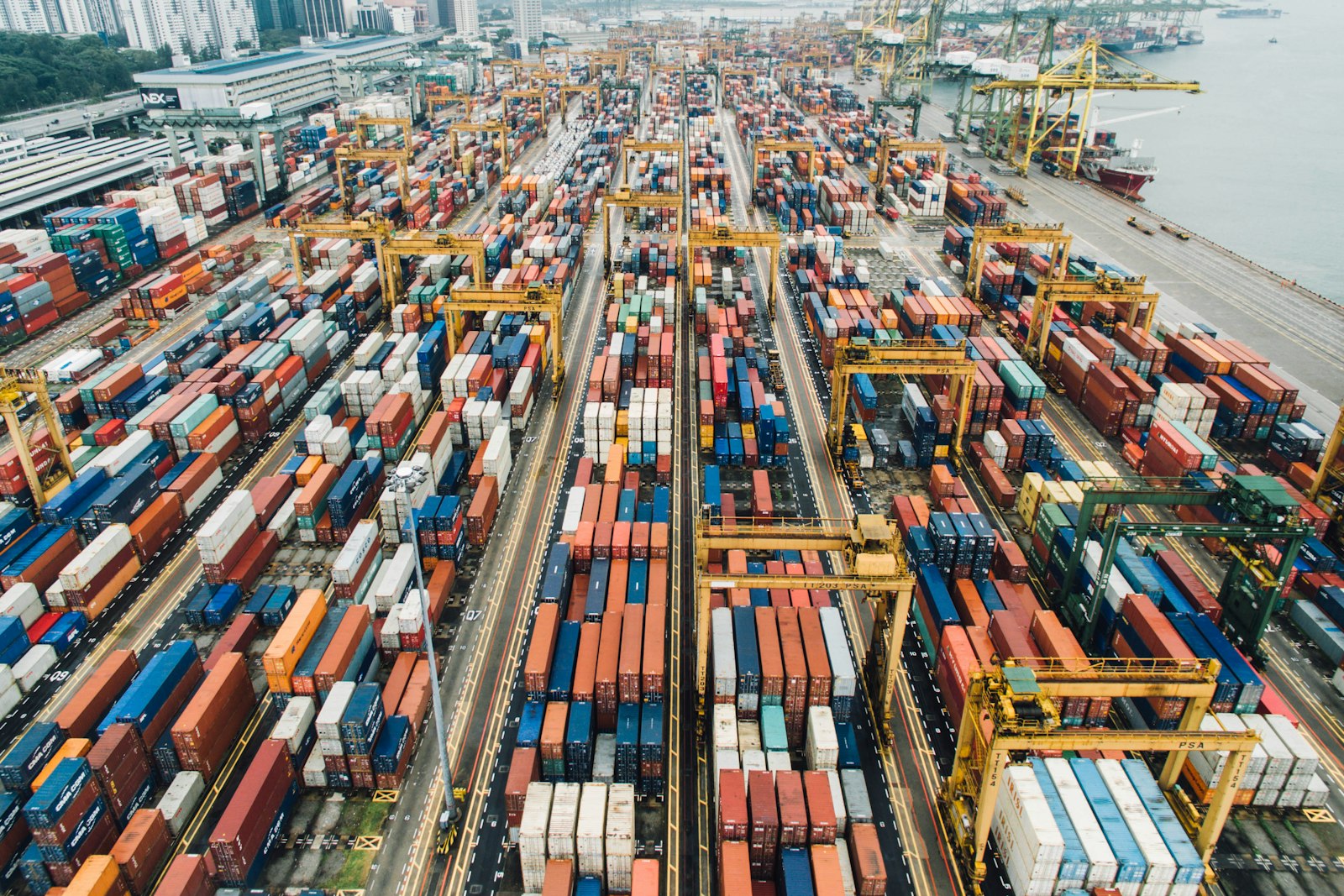
Container ship at port
Photo: Unsplash · CC0
What we do not know
Six gaps in the data.

Taken together, these gaps mean that a significant fraction of Dutch plastic environmental impact is structurally invisible to the people responsible for managing it.

G1
No mass-based land litter monitoring
Government agencies count items at selected sites but have never weighed them or identified material types. From 2022, material identification began at some sites; a national mass estimate remains years away.
G2
Export fate unknown
514 kt is exported to 56 countries. UN Comtrade records the shipment, not what happens at the destination. The EU Waste Shipment Regulation (2024) mandates fate tracking — but only from 2026.
G3
Recycling statistics measure output, not outcome
Verpact reports tonnes handed to certified processors. Open-loop recycling that ends in Asian incineration or landfill is still counted as recycled in Dutch statistics. The gap between the official rate and actual material circularity has never been formally quantified.
G4
Most imported plastic scraps untraced
The Netherlands imports nearly a fifth of global plastic waste — making it, per capita, the world's largest importer. The source, treatment and fate of this material are unrecorded.
G5
River retention stock unquantified
Van Emmerik & Schwarz (2020) demonstrated that plastic accumulates in river systems for years to decades before being flushed seaward. Today's ocean load partly reflects littering from the 1990s. Present-day attribution systematically understates the responsibility of historical actors — including industrial producers.
G6
Commercial and public-space waste invisible
Plastic waste from railway stations, offices, events and public infrastructure is collected without material composition analysis.
↑ top 02 · causality →
Responsibility for Ocean Plastic · 01 Evidence